AI-Powered Scams: 5 Ways Hackers Are Stealing Your Data in 2026 (And How to Stop Them)
You get a voice message from your boss asking for urgent bank details. The voice sounds exactly like them. You reply. Big mistake.
That voice wasn't your boss. It was AI-generated in seconds.
Welcome to 2026, where deepfake voice attacks through messaging platforms increased by 1,100%. AI scams aren't coming. They're already here. And they're getting smarter every day.
Here's what you need to know: communication-targeted attacks grew 38% in 2025. Messaging-based phishing (smishing) exploded by 312%. And data breaches in 2025 impacted at least 375 million individuals.privacyrights+1
This isn't fear-mongering. This is reality.
Let me show you 5 ways hackers are using AI to steal your data right now and exactly how to protect yourself with tools that actually work.
Scam #1: AI Voice Cloning - The "Your Boss Needs Money" Trick
Here's how it works: scammers record just 3 seconds of someone's voice from social media, a Zoom call, or even a voicemail. They feed it into AI software. Within minutes, they have a perfect voice clone.
Then they send you a voice message: "Hey, it's Sarah from accounting. I need you to transfer $5,000 to this account urgently. We're in a meeting, so just listen and confirm."
The voice sounds real. The urgency feels real. And before you know it, you've lost thousands.
Why this works: 64% of people cite data breaches as their top concern, but most still trust voice messages without verification.
How to protect yourself: Never act on financial requests via voice messages alone. Always verify through a separate channel. Use anonymous messaging platforms that don't expose your identity or contact information in the first place.
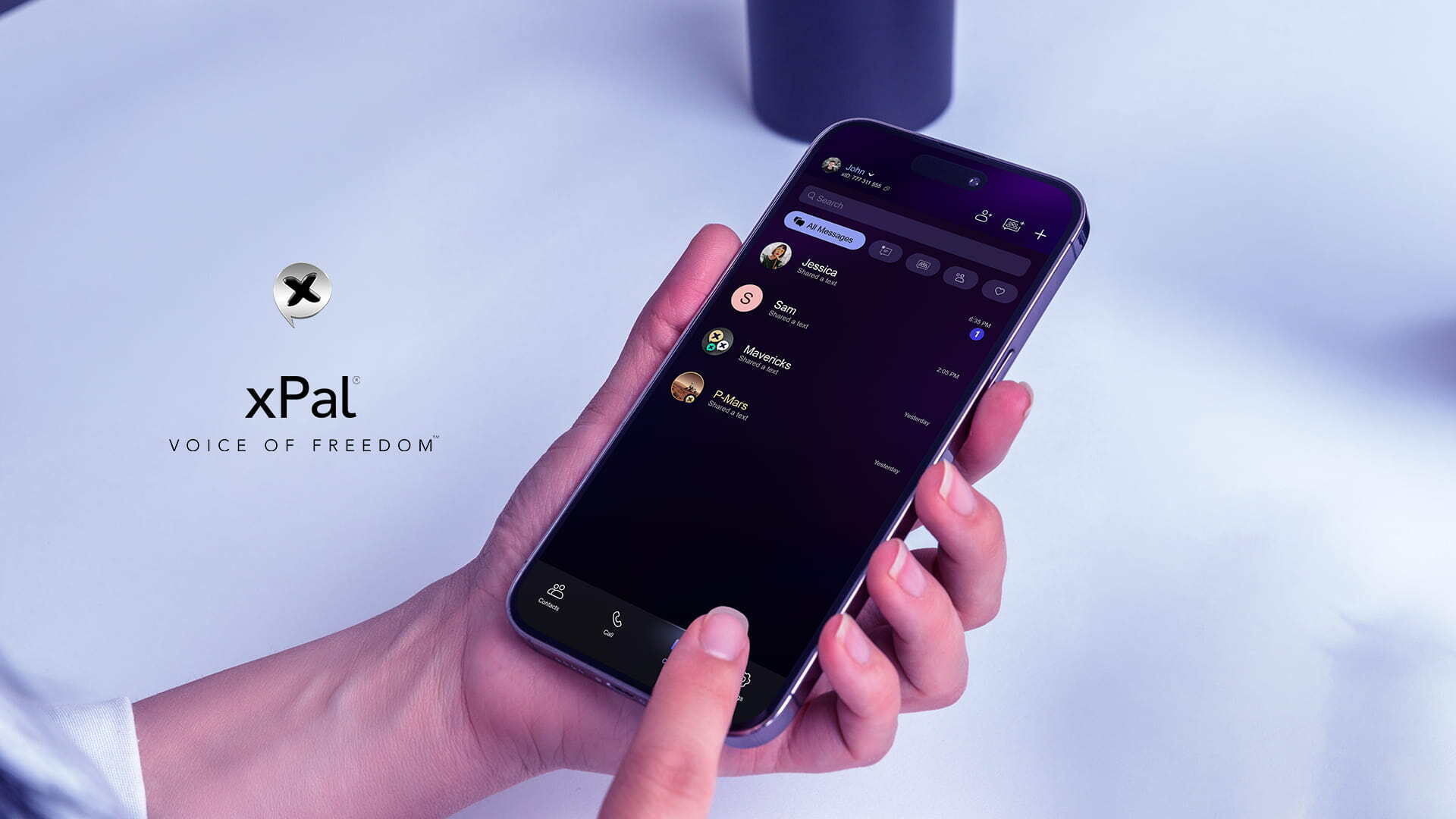
With xPal, you communicate through a 9-digit xID®, not your phone number or email. Scammers can't target you if they can't find you.
Scam #2: AI-Generated Text That Looks Perfectly Human
You receive a message: "Hi Ayesha, this is the bank fraud department. We noticed suspicious activity on your account. Please click here to verify your identity immediately."
The grammar is perfect. The tone is professional. The urgency is real. But it's all AI-generated.
Modern AI can write messages that pass every human test. No typos. No weird phrasing. No obvious red flags. Just clean, convincing text that looks 100% legitimate.
The numbers: Unauthorized access to personal information affects 53% of respondents in 2025, and AI-generated phishing is the fastest-growing attack method.
How to protect yourself: Enable end-to-end encryption chat on all your messaging apps. When messages are encrypted on your device and only decrypted on the recipient's device, no one in the middle can intercept or manipulate them.friendmichael+1
xPal uses cryptographic algorithms validated under the NIST CAVP Cryptographic Algorithm Validation Program, the federal standard for cryptographic correctness. This means your messages stay between you and the recipient, period.
Scam #3: Fake Group Chats That Steal From Everyone
You're added to a "Company Bonus Discussion" group chat. The admin's name looks familiar. The profile picture matches HR. The message says: "Click here to claim your Q2 bonus."
Except it's not your company. It's not HR. And it's definitely not a bonus.
It's a fake group chat created by scammers who scraped employee names from LinkedIn and are now harvesting credentials from everyone who clicks.
Why this is dangerous: Secure group chat protocols need to update encryption keys whenever someone joins or leaves. Most apps don't do this, meaning every person who's ever been in your group can access every message, even after they leave.
How to protect yourself: Use platforms with true secure group chat features where encryption keys change when membership changes. This protects both new members (who can't see past messages) and former members (who lose access when they leave).
xPal's Group Messaging feature provides ultra-secure and private group communication with end-to-end encryption that protects every member. When someone leaves, they're locked out. When someone joins, they can't see history.
Scam #4: AI-Enhanced Metadata Harvesting
You share a photo of your new office. Looks harmless, right?
Hidden in that photo is metadata showing:
- Exact GPS coordinates of your workplace
- Device model and serial number
- Timestamp of when the photo was taken
- Software version and app used
Scammers use AI tools to extract this metadata from thousands of photos, building detailed profiles of where you work, where you live, your daily routines, and even your financial status.
The reality: Most messaging apps don't strip metadata before sending. Your photos are data packets about your life, and you're giving them away for free.
How to protect yourself: Use platforms that automatically strip all metadata from shared media. xPal's Photo & Video Distiller™ does exactly this—removing all hidden data before your photos are encrypted and sent.
Your photos look the same, but they don't carry information about your location, device, or habits.
Scam #5: AI-Powered Contact List Exploitation
Here's a scary fact: most messaging apps require access to your entire contact list. They upload it to their servers. They match phone numbers. They build massive databases of who knows who.
When that database gets breached (and 375 million people were impacted by data breaches in 2025), scammers get instant access to:
- Your entire contact list
- Everyone's phone numbers
- Names, relationships, and social connections
- Patterns of who messages whom
They then use AI to analyze these patterns and craft hyper-targeted scams. "Hi Dad, it's me. My phone broke. Can you send money to this number?"
Why this happens: Apps like WhatsApp, Telegram, and even Signal require phone numbers. Your contacts become part of a centralized database that can be hacked, leaked, or sold.
How to protect yourself: Use anonymous messaging platforms that don't require contact access, phone numbers, or personal data.
xPal does NOT access your contacts or any data on your device. We don't collect your name, phone number, email, location, or contacts. Your data stays on your device, where it belongs.
The Real Cost of AI Scams in 2026
Let's talk numbers:
- Global average breach cost: $4.44 million
- Businesses lose $2.9 billion annually to email compromise
- Deepfake voice attacks increased 1,100% through messaging platform
- The healthcare industry has the highest average breach cost
- Educational institutions are being targeted at record rates
And here's the kicker: zero-knowledge encrypted messaging platforms showed zero successful message interception incidents across all reported breaches.
The technology works when it's implemented correctly.
5 Steps to Protect Yourself from AI Scams
1. Never Trust Voice Messages Alone
AI voice cloning is too easy. Always verify financial or urgent requests through a separate channel. Call the person directly. Don't use the number in the message—use a number you already have.
2. Enable True End-to-End Encryption
End-to-end encryption chat isn't optional anymore. It's essential. When your messages are encrypted on your device and only decrypted on the recipient's device, no one in the middle can read or manipulate them.
xPal provides this with federally validated cryptography.
3. Protect Your Group Chats
Use secure group chat platforms that update encryption keys when membership changes. This ensures former members can't access past conversations and new members can't see history.
xPal's group messaging protects every member with end-to-end encryption.
4. Strip Metadata from Photos
Use platforms that automatically remove metadata from shared media. Your vacation photos shouldn't include your home address, device serial number, or daily routines.
xPal's Photo & Video Distiller™ strips all metadata before encryption.
5. Stop Sharing Your Contact List
If a messaging app requires access to your contacts, that's a red flag. Use anonymous messaging platforms that don't need your phone number, email, or identity.
With xPal's 9-digit xID®, you communicate globally without country codes or personal data.
Why xPal Is Built for the AI Scam Era
xPal isn't just another messaging app. It's a privacy-first platform designed for 2026's threat landscape:
- NIST CAVP Cryptographic Validation (federal standard)
- DEKRA Independent CyberSecurity Audit & Certification
- Google CASA/MASA Certification (App Defence Alliance)
- OWASP Secure Coding Practices alignment
We don't access your contacts. We don't collect your data. We don't require your phone number, email, or identity.
You get end-to-end encryption chat that actually works, anonymous messaging that protects your identity, and secure group chat that protects every member.
AI Scams Are Evolving. Your Privacy Should Too.
Think about it: scammers are using billion-dollar AI technology to steal from you. Why are you using basic apps to protect yourself?
The 5 scams we covered today are happening right now. To real people. With real consequences. In 2025 alone, at least 375 million individuals were impacted by data breaches.
You don't have to be next.
xPal gives you ultra-secure messaging with verified cryptography and total control. No phone number needed. Reduced identity exposure. Minimized metadata. No centralized ad tracking.
Your privacy matters. Your conversations should stay private. And in 2026, you will have options that actually work against AI-powered threats.
Download xPal today and start messaging with the privacy you deserve. Don't let AI scammers win.
Ready to protect your conversations from AI scams? Get xPal now and join the growing community of people who take privacy seriously in the age of artificial intelligence.
Visit xPal to learn more about ultra-secure messaging.