xPal vs Telegram, Signal, Session & Threema - A Comparison of the Modern Secure Messengers
Most modern secure messengers are built around accessibility and scale, with privacy added into systems that still rely on identity, storage, and continuous data availability. Users create an account, provide their personal data, exchange messages, messages stay available, accounts stay linked to identity, data remains recoverable across devices and servers, ads run, third parties stay involved, and the list goes on…
Yes, user experience is important, but clearly not at the cost of many things.
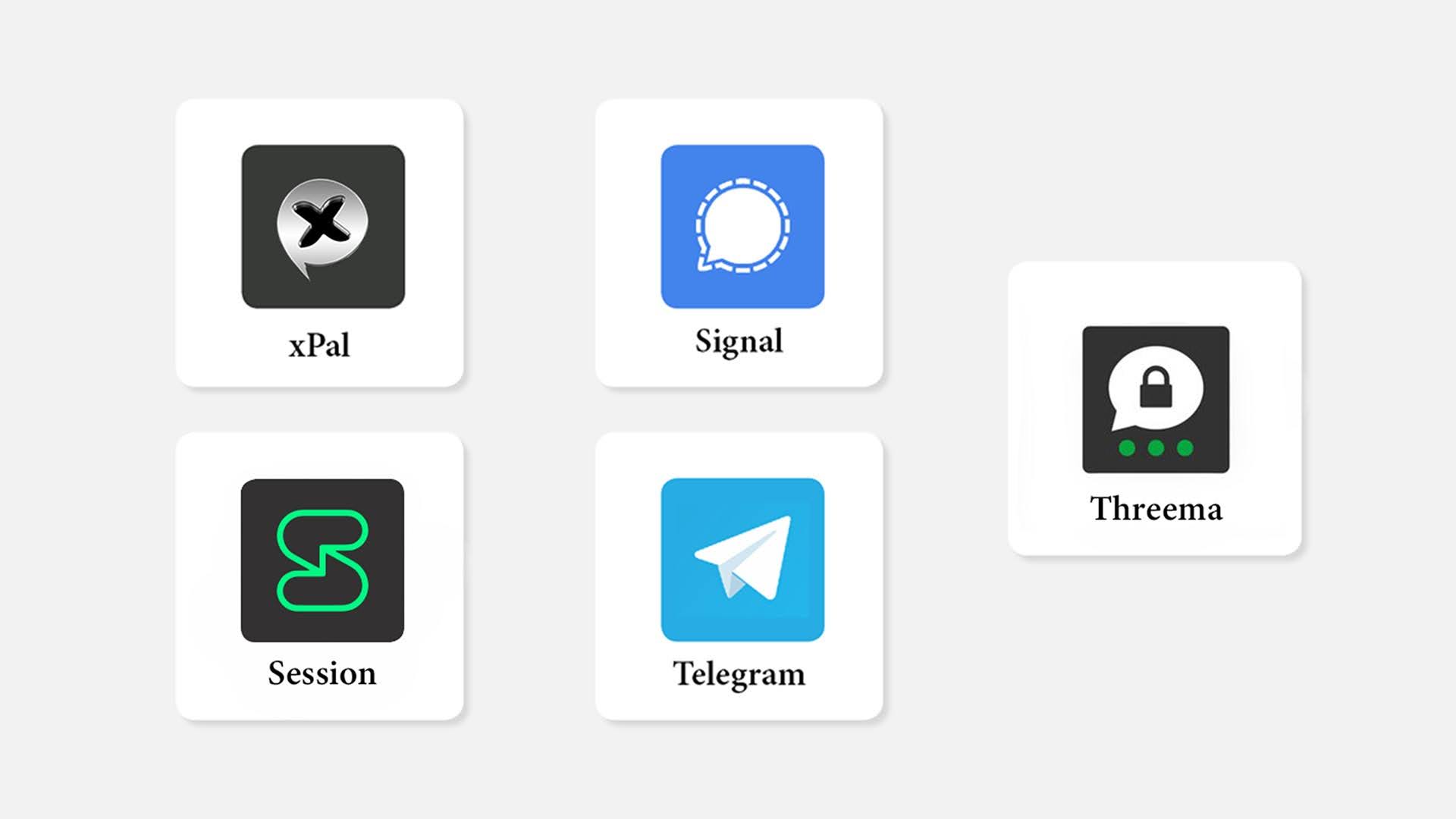
xPal vs Modern Secure Messengers: A New Standard in Identity and Data Control
Most secure messaging apps secure communication within architectures that still rely on user identity and stored data, while others take a different approach by reducing the amount of information in the system.
This difference becomes clear when comparing xPal, the private messaging app, with Telegram, Signal, Session, and Threema.
Control Over Data (What Actually Happens to Your Data When You Need Control)
| What users actually think | xPal | Telegram | Threema | Session | Signal |
|---|---|---|---|---|---|
| Can I delete messages from both sides completely? | ✓ | Partial | Partial | ✗ | Partial |
| Can I erase an entire conversation, not just hide it? | ✓ | ✗ | ✗ | ✗ | ✗ |
| If my phone is lost, can I remotely wipe everything? | ✓ | ✗ | ✗ | ✗ | ✗ |
| Can I instantly destroy all data without recovery? | ✓ | ✗ | ✗ | ✗ | ✗ |
| If someone forces me to open the app, can I hide everything? | ✓ | ✗ | ✗ | ✗ | ✗ |
| Can my data stay locked if the phone is offline? | ✓ | ✗ | ✗ | ✗ | ✗ |
What this shows is that most Modern secure messengers give you options to manage data, while xPal is built so that data can be fully removed, not left behind in any usable form.
Identity Exposure (Do You Exist in the System or Not?)
| Point to consider | xPal | Telegram | Signal | Session | Threema |
|---|---|---|---|---|---|
| Do I need a phone number to even start? | ✗ | ✓ | ✓ | ✗ | ✗ |
| Is my real identity tied to my account? | ✗ | ✓ | ✓ | Indirect | Indirect |
| Does the app need access to my contacts? | ✗ | ✓ | ✓ | ✗ | Optional |
| Can I use it without revealing who I am? | ✓ | Limited | Limited | ✓ | ✓ |
Here, most platforms reduce the exposure of identity. xPal secure communication platform, on the other hand, removes identity dependency from the system entirely.
Where Your Data Exists After Sending (This Is Where Most Apps Fall Short)
| Point to consider | xPal | Telegram | Signal | Session | Threema |
|---|---|---|---|---|---|
| Are my messages permanently stored on servers after I send them? | ✗ | ✓ | ✗ | Distributed | ✗ |
| Do messages stay only on my device? | ✓ | ✓ | ✓ | ✓ | ✓ |
| Can deleted messages still be recovered later? | ✗ | ✓ | Partial | ✗ | Partial |
| Are messages kept just to sync across devices? | ✗ | ✓ | ✓ | ✗ | Limited |
Most apps handle messages for storage and management. xPal delivers and eliminates the messages.
Real-World Situations
| Situation | What happens |
|---|---|
| If someone opens your unlocked phone | xPal → data stays hidden or inaccessible without proper session state |
| If your device is lost or stolen | xPal → remote wipe removes all data permanently |
| If someone tries to trace your activity | xPal → minimal data exists to reconstruct behavior |
| If you need to erase everything instantly | xPal → full irreversible wipe |
xPal private messaging app is also designed for pressure or unfortunate scenarios.
How Each App Is Actually Built (Not What They Claim But What They Do)
| Question | xPal | Telegram | Signal | Session | Threema |
|---|---|---|---|---|---|
| What is the main goal of the system? | Eliminate exposure and anonymity with control | Scale & access | Private messaging | Decentralized anonymity | Private communication |
| Does it store data long-term? | ✗ | ✓ | ✗ | ✗ | ✗ |
| Does it depend on identity? | ✗ | ✓ | ✓ | ✗ | ✗ |
| How does it handle risk? | Removes it | Manages it | Reduces it | Blur it | Reduces it |
FAQs
1. What does “private communication” really mean?
It means your messages, your identity, and even your activity are not visible to anyone else, not even the app, not third parties.
2. Are all secure communication platforms basically the same?
Not really, some protect messages, but still store data or use your identity. Others, like xPal, try to reduce all of that from the start.
3. Can someone figure out who I am through a messaging app?
If your account is tied to your phone number or contacts, yes. If it is not, like with the xPal private messaging app, it becomes much harder.
4. Does using my phone number make it easier to track me?
Yes. A phone number is a strong identifier and can be linked across different platforms.
5. Do my contacts automatically see me on messaging apps?
In many Modern secure messenger apps, yes. They sync your contacts. xPal avoids this by not accessing your contact list.
6. Do apps keep my chats even after I delete them?
In cloud-based apps, sometimes yes. In systems without storage, once deleted, they are gone.
7. Are cloud chats less private?
Generally, yes, because your data is centralized.
8. Can someone see my messages without opening the app?
Sometimes through notifications or previews. Some apps let you control or block that.
9. If messages are encrypted, can apps still track me?
Yes. Encryption protects content, but not always behavior.
10. Is Telegram private enough?
It has useful features, but its cloud-based system means data is stored in the cloud.
11. Why is Signal considered secure but not fully anonymous?
It encrypts messages well, but still requires a phone number.
12. What matters more, features or privacy?
More features often mean more exposure. It’s a trade-off.
13. Which private messaging app gives the most control?
The one that lets you decide what exists and what gets erased. xPal is built around that idea.