Why “Delete for Everyone” Fails in Encrypted Messaging Apps
“Delete for everyone” has become one of the most trusted features in modern encrypted messaging apps because it is something super simple to send a message, realise it is a mistake, and erase it.
But here is the difference: it could only be a completely reliable feature when it lets users delete a message or an entire thread anytime, anywhere.
In most encrypted messaging apps, deletion is more of a request, but time- and situation-bound. That doesn’t change the fact that it depends on timing, device behavior, and system synchronization. And once a message has been delivered, control no longer belongs entirely to the sender.
Beyond that, most people do trust a feature that was never designed to deliver what they think it does.
Across apps like WhatsApp and Signal, message deletion or “how to delete a text message” is not controlled, but it is a best-effort request to update the interface on another device. If we want to delete a message, we want it to be removed from everywhere, not just from our visibility.
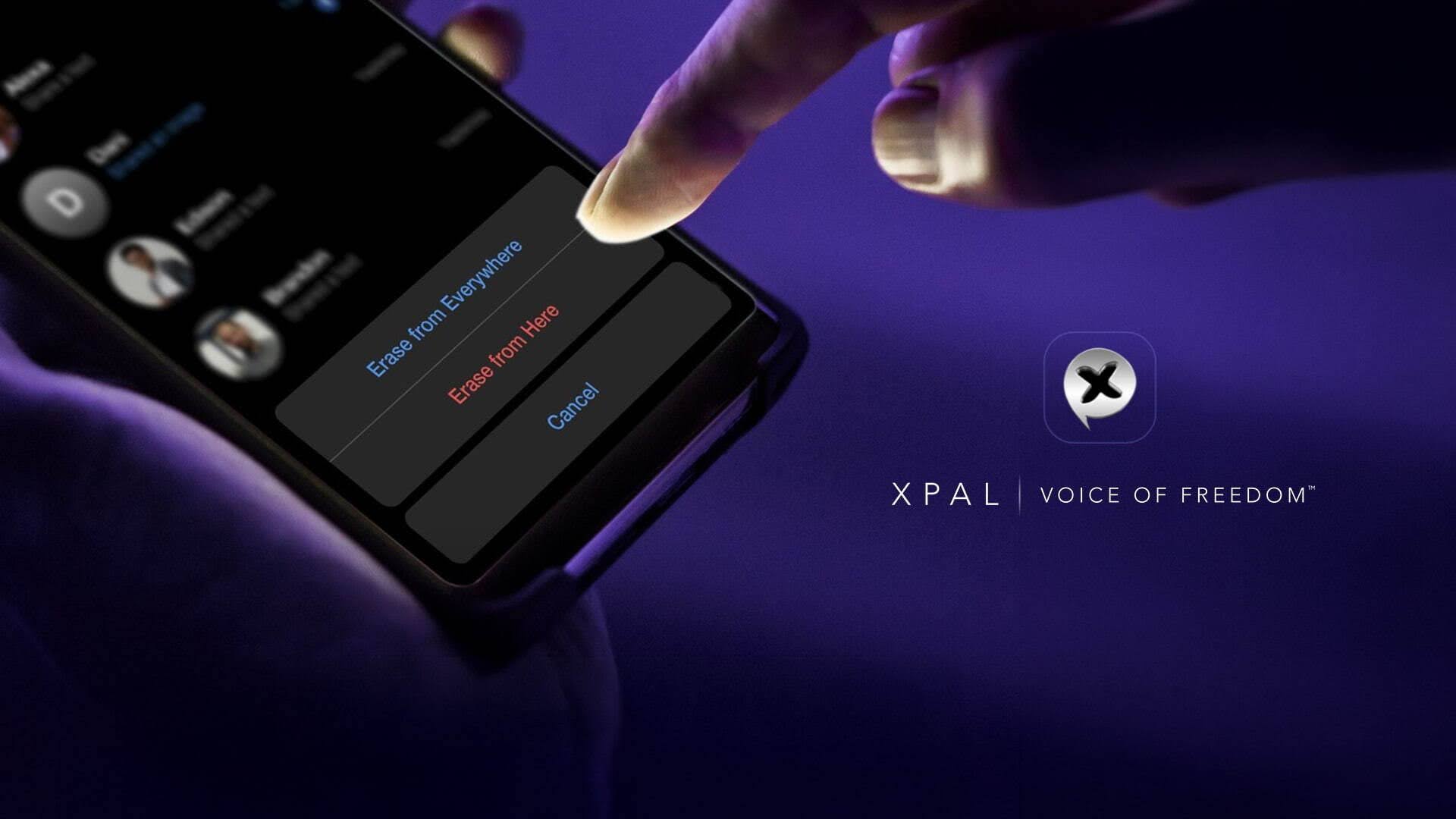
How can “deleted messages” impact encrypted messaging apps?
Let’s first understand the core misconception between visibility and the existence of a message.
Users assume deletion does three things:
- Removes the message from both devices
- Erases any trace of it
- Prevents future access
Clearly, this is exactly what a user wants. However, none of these are guaranteed because what actually happens is far simpler and far less reassuring.
If time is considered, the message is removed from the chat interface. Once a message is sent, it is decrypted on the recipient’s device. It may be stored locally (database, cache, notifications), it may be backed up automatically, it may already be seen, screenshotted, or exported, and many things can happen.
And it doesn’t stop there; encryption is often overestimated. Platforms like xPal emphasize strong cryptography and rightly so after valuing encryption as one of the important layers, not the whole security architecture.
Encryption only protects data in transit, so after delivery, the message is decrypted and exists in plain form on another device. Which means control shifts away from the sender.
Encryption does not and cannot control everything, and having said that, that is not a flaw. It is how messaging works.
So the question arises, what true control would be?
Fundamentally and by default, no time limit on when to delete messages; messages can be removed from both sides, not just your screen, and messages are not stored for a long time, resulting in fewer chances for messages to be copied or saved elsewhere.
Almost no mainstream app is built this way, but xPal is!
Delete for Everyone vs Real Message Control (xPal vs Other Apps)
1. Core Concept Difference
| Concept | WhatsApp / Telegram / Signal | xPal |
|---|---|---|
| What does “delete messages” mean | Removes message from chat view (limited long-term control) | Removes message + can erase full communication history (system-level control) |
| Control type | Message-level action | Identity-level + session-level control |
| Power model | Platform rules decide limits | User-driven control tools (PIN, wipe, terminate modes) |
2. Reality of “Delete for Everyone.”
| Limitation | Telegram | Signal | |
|---|---|---|---|
| Time restriction | Yes (strict window) | Weak/partial | Moderate |
| Works after reading | Often unreliable | Sometimes works | Limited |
| Prevents copies/screenshots | No | No | No |
| Backups | No control | No control | No control |
| Removes from all devices fully | Partial | Partial | Partial |
3. xPal Message Control System
| Feature | Free | Gold | What it actually does |
|---|---|---|---|
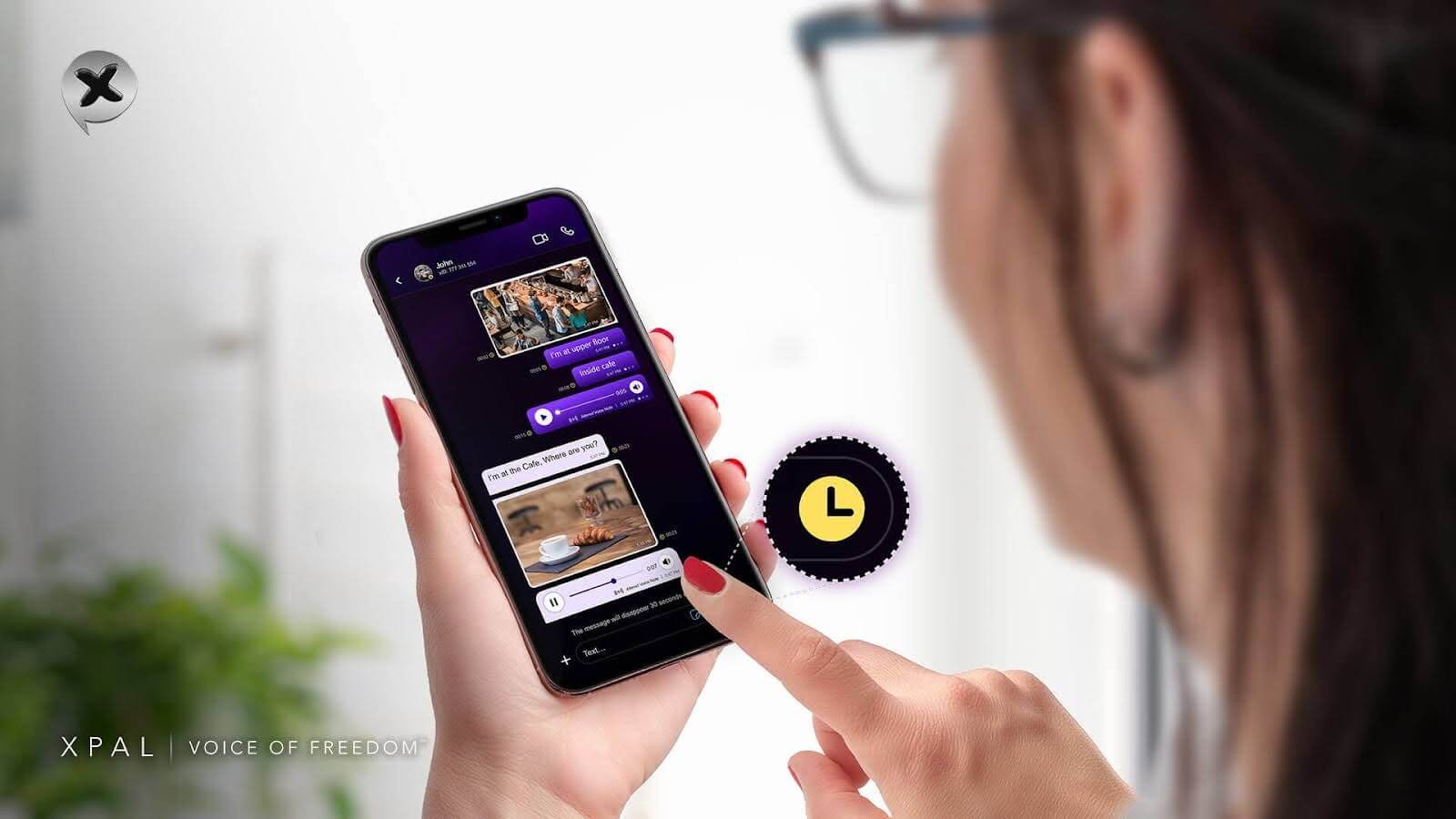
| Terminate™ Mode | ✗ | ✓ | Deletes entire chat history beyond message-by-message deletion |
| Total Wipeout™ (Reverse PIN) | ✗ | ✓ | Instantly wipes all chats, media, and call history across participants |
| Flicker™ Messages | ✓ | ✓ | Auto-deletes messages after being viewed (time-based self-destruction) |
| Decoy PIN | ✗ | ✓ | Shows a fake hidden environment instead of real data |
| Offline Lock | ✓ | ✓ | Prevents offline access to chats |
| Remote Wipeout | Limited | Enhanced | Allows remote device-level data wipe when reconnected |
4. Control Depth Comparison
| Level of Control | Telegram | Signal | xPal | |
|---|---|---|---|---|
| Delete a single message | ✓ | ✓ | ✓ | ✓ |
| Delete for everyone | ✓ (limited) | ✓ | ✓ | ✓ |
| Delete full conversation history | ✗ | ✗ | ✗ | ✓ |
| Delete across devices in extreme cases | ✗ | ✗ | ✗ | ✓ (Wipeout/Terminate system) |
| Emergency destruction mode | ✗ | ✗ | ✗ | ✓ (Reverse PIN system) |
| Hidden access environment | ✗ | ✗ | ✗ | ✓ (Decoy PIN) |
FAQs
1. Can someone read my message even after I delete it immediately?
Yes. If they were online or got a notification preview, they may have already seen it before deletion was processed.
2. Where do deleted messages actually go? Are they stored somewhere or completely removed?
They may still exist in local storage, app cache, backups, or notification logs. Deletion does not guarantee full removal from all locations.
3. Can someone recover a message I deleted, like from backups or apps?
In some cases, yes. If backups or third-party tools are involved, previously stored messages can sometimes be accessed. xPal has no third-party involvement.
4. Why do deleted messages sometimes reappear after restoring a phone or app?
Because backups may still contain the original message, which gets restored along with other data.
5. Is this limitation only in WhatsApp, or do all encrypted messengers have this issue?
All major encrypted messaging apps face this limitation to some degree because of how device-based messaging works.
6. If a message is encrypted, doesn’t that mean it is secure even after I delete it?
Encryption protects the message during transmission, not after it has been delivered and stored on another device.
7. Can screenshots or screen recordings bypass message deletion completely?
Yes. Once captured externally, deletion has no effect at all.
8. Why do apps even offer “Delete for Everyone” if it is not fully reliable?
Because it improves user experience and works in many cases, but it is not designed as a guaranteed control mechanism. However, xPal has the strongest message control features, which let users even remove data from a stolen device.
9. What happens if the other person already opened the chat before I deleted the message?
Then deletion only removes it from the interface afterward; it doesn’t undo what they have already seen.
10. Can businesses rely on xPal message deletion features for sensitive communication?
Yes. xPal’s advanced privacy controls and wipeout features give you greater control over messages.
11. Is there any way to guarantee that a message disappears from both sides completely?
Only systems designed with strict lifecycle control attempt this, like xPal Total Wipeout™ or Remote Wipeout™ features.
12. What is the difference between deleting a message and actually controlling it?
Deletion removes visibility; control means whether the message continues to exist anywhere in the system.
13. What is xPal designed to do differently from regular encrypted messaging apps?
xPal is designed to give users more control over how long their messages exist and how they behave across devices.
14. Does deleting a message on xPal remove it immediately everywhere?
xPal is built to support stronger cross-device removal behavior, so message visibility and existence are handled in a more controlled way than standard chat deletion.
15. What does “message lifecycle control” mean in xPal?
It means messages are not treated as permanent by default. Instead, their existence, visibility, and persistence are designed to follow defined system rules. No long-term storage at all.
16. Can messages be duplicated or forwarded in xPal?
xPal encrypted messenger aims to reduce uncontrolled duplication paths, helping users maintain clearer control over message distribution.
17. What is meant by “reduced duplication paths”?
It means limiting unnecessary internal copies of messages across devices and system layers.