xPal vs Wire: Which Is Better for Business Communication?
When organizations look for a secure messaging app or communication tools for better business communication, platforms like Wire usually come up first, and clearly for good reason. Wire is structured, compliant, and built for teams that need controlled collaboration.
However, privacy and security are something that is non-negotiable for individuals and forward-thinking organizations, too.
The real risk is sometimes beyond keeping messages encrypted. It can be about everything around them, like your identity being exposed, not having full control over your data, and privacy gaps that can still put you or your organization at risk.
xPal operates on a different security model than enterprise collaboration systems like Wire, focusing on identity removal rather than identity-based access control.
For organizations evaluating secure communication tools, the xPal encrypted communication app is the solution to how deeply you want to control privacy, identity exposure, and data security.
xPal is a cryptographically protected communication platform built for anonymous global messaging and calling, without linking conversations to any user identity. Wire, on the other hand, is designed for enterprise collaboration, focusing on structured workflows, team management, and organization-based business communication.
Both platforms deliver on core expectations like privacy, security, and end-to-end encryption. But the real difference appears when you look at how they approach security at a foundational level.
Wire operates within an identity-centric model, where users, access, and communication are tied to organizational identities. This works well for managed environments.
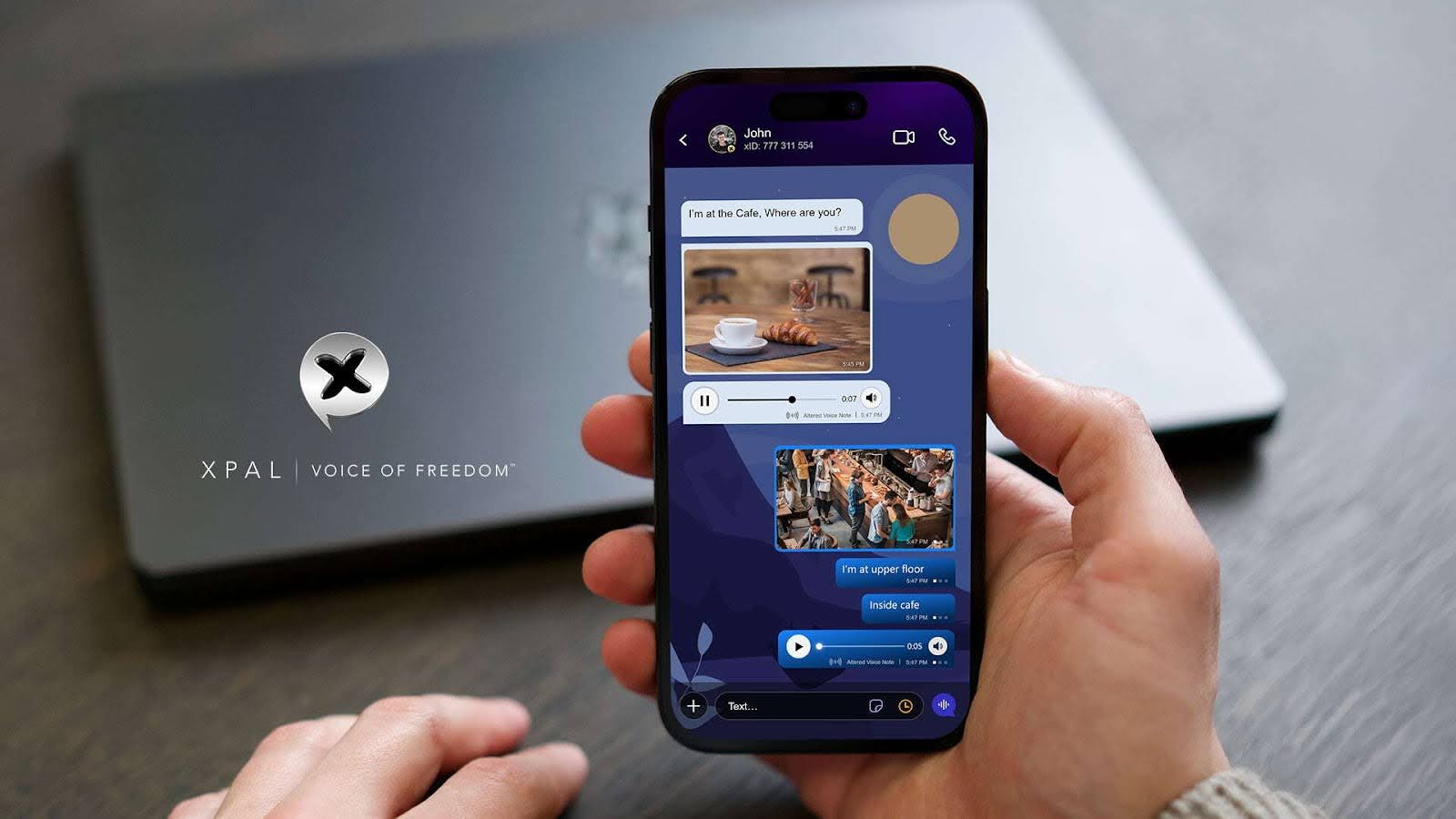
xPal messaging app takes a different path with an identity-eliminating architecture, where communication exists without exposing or depending on user identity at all.
For organizations, this means choosing between managing secure identities and removing identity as a risk altogether.
Let's understand this shift that can significantly strengthen privacy and security at its core.
Security & Cryptographic Architecture Comparison
| Security Layer | xPal | Wire |
|---|---|---|
| Core Security Model | Identityless cryptographic communication | Enterprise identity-based secure collaboration |
| Encryption Foundation | NIST CAVP-validated cryptographic implementation | MLS-based encrypted collaboration system |
| End-to-End Encryption | Full coverage (messages, calls, media) | Full coverage |
| Encryption at Rest | Fully enforced on the device layer | Supported |
| Trust Model | Zero-identity trust architecture | Zero-trust enterprise model |
| Metadata Handling | Metadata collection and storage minimized | Controlled enterprise metadata handling |
| Identity Dependency | None (xID™ systems) | Required (organization/user identity) |
| Post-Compromise Security | Supported via layered destruction controls | Supported |
| Verification Model | Cryptographic xID-based identity isolation | Cross-signed device verification |
Identity & Access Model
| Feature | xPal | Wire |
|---|---|---|
| User Identity | 9-digit xID™ (anonymous endpoint identity) | Email / organization-based identity |
| Registration Requirement | No phone, no email | Organization or account-based login |
| Contact Discovery | xID direct connection model | Directory / workspace-based discovery |
| External Communication | Direct anonymous connection | Guest access with controlled permissions |
| Identity Exposure Risk | Architecturally eliminated | Controlled but present in system design |
Communication & Messaging System
| Feature | xPal | Wire |
|---|---|---|
| 1:1 Messaging | Fully encrypted | Fully encrypted |
| Group Communication | Encrypted group channels | Enterprise secure group spaces |
| Audio/Video Calls | End-to-end encrypted P2P calls | MLS-secured conferencing |
| Large Group Support | Secure scalable groups | Enterprise-scale conferencing |
| Message Lifecycle Control | Total Wipeout™, Terminate™, Flicker™ | Native self-deleting messages |
| Message Search | Local encrypted search | Group-based search |
| Guest Communication | xID-based secure access | Guest links with permissions |
Advanced Privacy & Control Systems in a xPal Secure Messaging App
xPal secure messaging app is best for organizations that need more than just encryption or business communication features and want something structured to meet strict privacy demands while giving complete control over data.
It goes beyond standard private messaging by introducing user-controlled cryptographic destruction systems. This means your teams can control what happens to the data at every stage.
With the xPal messaging app, business communication stays protected at all times, and when needed, it can be erased with a single command from supported, connected xPal clients.
Total Wipeout™ (Bidirectional Data Destruction)
Here, the xPal encrypted communication app goes beyond and gives users control over the entire life of a message, and there are no device or time restraints.
- xPal facilitates absolute data and message deletion anytime, anywhere.
Total Wipeout™ is a powerful, system-level erase feature designed for complete control over sensitive communication.
It allows you to:
- Remove all messages from both the sender's and receiver's devices
- Delete the entire conversation history
- Trigger an irreversible wipe using secure reverse authentication (Reverse PIN)
For organizations, this means critical data stays protected and can be eliminated when required, leaving no recoverable trace behind.
Terminate™ (Conversation Erasure Control)
For organizations that need strict control over sensitive communication, this privacy and security feature provides full conversation-level deletion across all participants.
It does not just remove messages from one device; it ensures that all messages, replies, and shared files are erased from every endpoint involved in the business communication.
Once activated, the conversation is terminated in a way designed to prevent recovery, backup restoration, or reconstruction. For compliance-sensitive or high-risk environments, this means the interaction is fully eliminated with no residual trace left in the system.
Flicker™ Messaging Layer
For organizations handling sensitive business communication, the Flicker™ Messaging Layer provides strict control over how long information exists.
It operates as a time-bound message lifecycle system, where messages are automatically deleted after being viewed or after a defined duration.
Organizations can set retention windows ranging from 5 seconds to 24 hours, depending on operational needs.
Because this is enforced at the protocol level in the xPal encrypted communication app for business, expiration is not just a visual or app-based setting; it is structurally built into the system, ensuring messages cannot exist beyond their intended lifespan.
Decoy PIN System
Decoy PIN feature adds an extra layer of situational privacy and security protection when device access may be compromised or forced.
It allows a second, alternative PIN to be configured alongside the primary access code. When this Decoy PIN is entered, the application opens in a hidden mode, where real conversations, contacts, and sensitive data are completely concealed.
In this mode, only a restricted or masked view of the xPal messaging app is shown so that no confidential organizational information is exposed.
Furthermore, to return to full access, the correct primary PIN must be entered, which restores the normal secure environment.
For organizations, this is a protective fallback layer that helps safeguard sensitive communication even under forced or unintended access scenarios.
Offline-Lock™ Security Layer
This xPal feature ensures messages cannot be accessed when a device is offline.
It requires live network validation before any data can be viewed, which prevents unauthorized access to locally stored information and reduces the risk of data extraction from a compromised device.
Remote Wipeout™
For organizations, this feature provides a critical layer of loss-response privacy and security through remote device-level data destruction.
If a device is lost or compromised and later reconnects to the network, the system automatically triggers a secure wipe. All xPal data is erased from the device, ensuring that sensitive organizational or business communication cannot be recovered or accessed under any circumstance.
Photo & Video Distiller™
For organizations, this feature ensures that all shared media is stripped of metadata before it is encrypted and transmitted.
It makes sure files are privacy-clean before leaving the device, preventing exposure of hidden details like source information or technical identifiers. This reduces the risk of forensic analysis or unintended data leakage from media files.
Certification & Security Validation
| Security Standard | xPal | Wire |
|---|---|---|
| Cryptographic Validation | NIST CAVP certified | MLS protocol implementation |
| Independent Security Audit | DEKRA certified | External compliance frameworks |
| Secure Development Standards | OWASP aligned | Industry-secure SDLC |
| Government / Compliance Readiness | Multi-framework aligned (CASA/MASA) | ISO, FedRAMP, NIST compliance |
System Architecture
| Layer | xPal | Wire |
|---|---|---|
| Application Architecture | Client-server encrypted system | Federated collaboration architecture |
| Identity Layer | xID™ cryptographic identity isolation | Workspace-based identity system |
| Backend Stack | .NET Core, C# APIs | Enterprise backend infrastructure |
| Client Framework | React Native / React JS | Native + enterprise clients |
| Deployment Model | Multi-platform secure communication system | Cloud / on-prem/private deployment |
FAQs
Is xPal more secure than Wire for private communication?
xPal secure messaging app is designed to minimize identity and metadata exposure, while Wire secures communication within an identity-based enterprise system. More secure depends on whether you prioritize privacy or organizational control.
Does Wire require a phone number or email to use?
Wire typically requires an email or enterprise account setup, while xPal does not require any personal identifier, such as a phone number or email.
Is Wire suitable for anonymous messaging?
No. Wire is designed for verified enterprise users and is not intended for anonymous communication.
Does Wire offer a message of self-destruction?
Wire offers secure message control features, but it does not provide system-level irreversible destruction like xPal's Wipeout architecture.
Does xPal require a real-world identity?
No. xPal is built to operate without identifiers tied to a real-world identity, such as phone numbers, email addresses or usernames. It is pseudonymous rather than fully anonymous, since a persistent 9-digit xID identifies your account.
Is xPal really secure or just marketing?
xPal is built on NIST CAVP-validated cryptography and independently audited privacy and security frameworks, which gives it verified credibility.
Does xPal allow contact discovery?
No. xPal does not use contact lists or phone-based discovery; users connect via xID®.
Can Wire messages be intercepted?
Wire uses encryption protocols to prevent interception, but system security still depends on enterprise configuration.
Which app has stronger privacy and security: xPal or Wire?
xPal messaging app emphasizes absolute privacy with no identity or metadata dependency, while Wire emphasizes secure enterprise communication with controlled identity.
What is xID in xPal?
xID is a private 9-digit identifier that acts as your pseudonymous communication identity without linking to personal data.
Which app is better for privacy-focused users?
xPal is better suited for users who want maximum privacy without exposing their identity.
Which app is better for high-risk environments?
xPal is more suitable for high-risk scenarios due to identity removal, remote wipe, decoy access, and full data destruction.
Is Wire or xPal better for secure business communication?
The choice depends on use. Wire is better for structured team communication and enterprise environments. xPal encrypted communication app is better for privacy-first users who want pseudonymous messaging, minimal identity exposure, and greater control over their data, including deletion from supported clients and minimal data collection.