Why Do People Care About Messaging App Privacy but Still Use Less Private Apps?
Messaging app privacy matters, but messaging is also a social habit: people stay where life already happens, even when they know another app protects them better.
Most people who don’t use secure messaging apps are not rejecting the importance, almost nobody, if you in fact question them. The difficulty is that privacy is usually an invisible benefit, but noticeable as a control. People get so used to the conveniences that they notice an extra step every time they use an app, but may never notice the security incident that didn’t happen because the app was designed with privacy in mind in the first place. They seem to avoid the hassle of getting there.
Some things come up again and again when you dig into why someone never tried a privacy-focused app once or went back to what they had before: particularly, the features feel like they were built for someone else, moving their contacts over feels like starting from scratch, trusting a company they have never heard of feels like a leap of faith, and the whole thing seems like more work than the app already open on their home screen. That last point is easy to take too lightly. Messaging is a habit people repeat dozens of times a day, so even tiny amounts of friction can become surprisingly powerful reasons not to switch.
What this ultimately creates is a Messaging app privacy question that is less about whether people value privacy and more about whether privacy can fit naturally into an everyday communication habit. None of that is illogical, and those are the real, sound reasons adoption stalls, and they are worth taking seriously rather than writing off as people simply not caring enough. A privacy tool therefore has to win two arguments at once: it has to make a credible case for protecting information, and it has to make the everyday act of communicating feel normal enough that people keep using it.
Barrier One: Why Secure Messaging Apps Can Feel Like They Are Not Made for Everyone?
Terms like end-to-end encryption, key exchange, cryptography, or a disappearing-message timer sound like they belong to secret departments, or to a journalist worried about a source, not to someone who just wants to text their sister about dinner plans. For the average user, “private messaging” is rarely the goal in isolation. The goal is still the ordinary thing like telling someone something, sending a photo, making a call, or asking a question. Security has to fit around that behavior rather than demanding that the behavior changes completely. That mismatch alone is enough to make plenty of people open a privacy app once, feel like they have walked into the wrong room, and go back to whatever they already know how to use. This is why the best privacy technology often feels almost boring when it works well: the cryptography can be extremely sophisticated while the user experience remains deliberately ordinary. For a chat application to become part of someone’s daily routine, the privacy layer cannot constantly remind the person that they are using a privacy product.
The psychology is simple: unfamiliar words can make something feel harder than it really is. Sending a message may be just as easy, but terms like encryption can make people feel they need to learn something first. Most people simply don’t want to study privacy before texting a friend.
What looks like a small difference can have significant consequences because security should ideally reduce the amount of technical knowledge required from the person using it. A user shouldn’t need to understand a key exchange protocol before they can safely say “I am running late.”
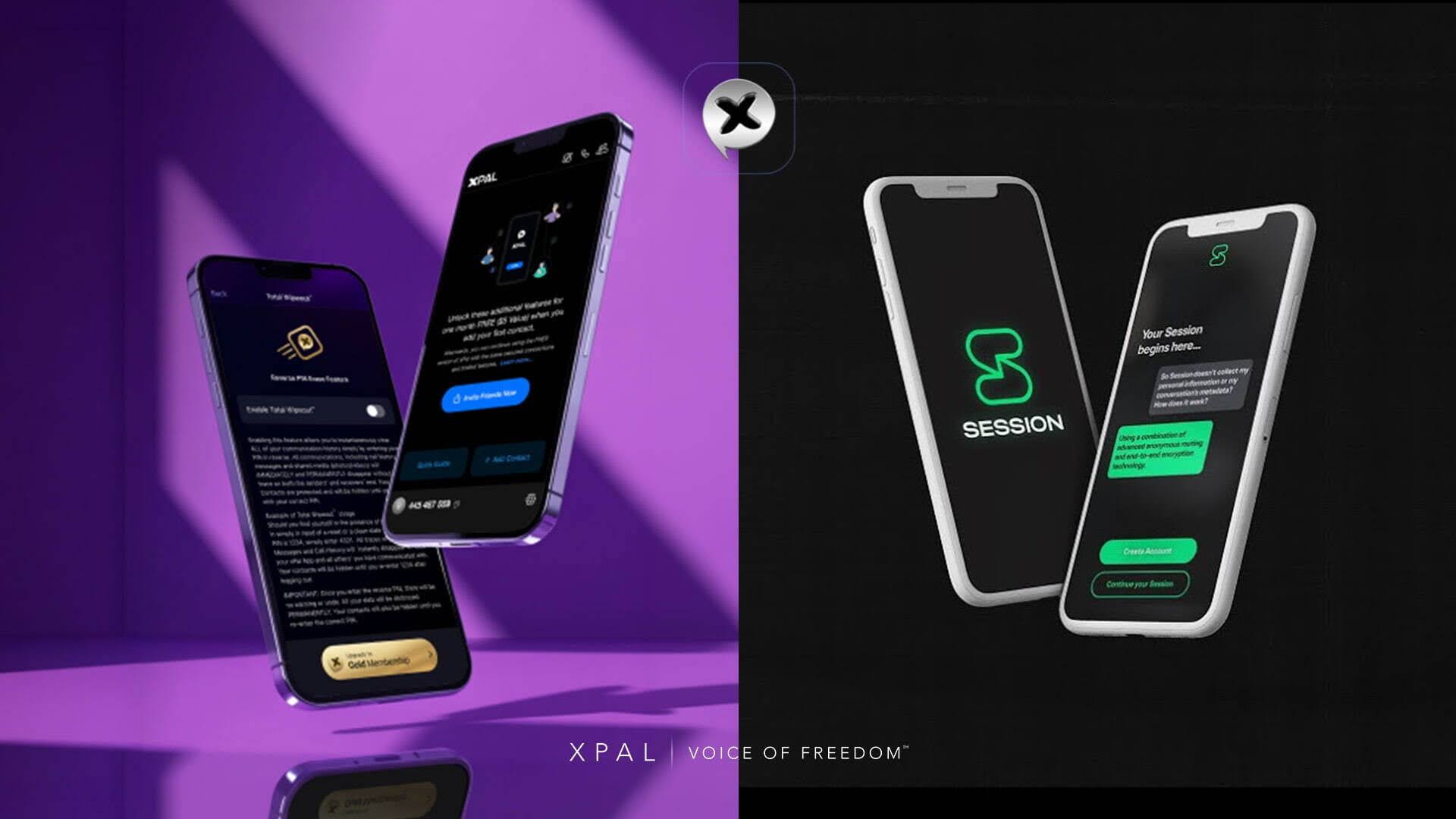
xPal privacy-focused app answer to this is mostly about what it doesn’t ask you to think about. Signing up is a username and a PIN, and there is nothing running like a long form or code, no key exchange to configure, no encryption settings to switch on, nothing resembling a security checklist before your first message goes out. Registration does not require a mobile number or email address, and it assigns the account a unique nine-digit xID. That makes the identity model itself part of the privacy experience rather than another setting users have to configure later. The protective parts run by default, invisibly, the same way they would on any app you already use without a second thought. That “default protection” principle is important because a security feature that works without asking the user to remember to activate it has a better chance of protecting people consistently.
The handful of features you do interact with directly — notes, pinning a chat, mute, block, setting a disappearing-message timer, switching between light and dark themes — all sit in plain, ordinary-looking settings menus. The xID concept is particularly important here because it is system-generated and does not bring in something unique and hard to go on with.
xID is a subtle usability advantage because it reduces the amount of personal information attached to the starting point of a conversation.
Barrier Two: Contact Migration Makes Switching Private Messaging Apps Difficult
An empty and lonely app is the single biggest reason people don’t switch, and it usually has nothing to do with the app itself. Everyone people want to talk to is somewhere else, and moving a social circle is a coordination problem. Yes, an app is only as useful as the people already on it, which means the first person to switch is always taking on the most risk for the least immediate reward. Nobody wants to be the friend who downloaded something new and is now the only one using it. This is the network effect at its most practical: the value of a messaging platform depends partly on whether the people you need to reach are already there.
That creates an odd problem for privacy-focused messaging apps. The person who cares enough to switch first receives the least immediate benefit, because their contacts have not switched with them yet. The more private alternative therefore has to overcome not only a technology barrier but a social one.
Most messaging apps make this easy by asking for access to your phone’s contacts. They upload the list and quickly show you which friends already use the app. It’s convenient, but there’s a cost people often miss: your entire contact list, including people who never agreed to share their information, may end up on the company’s servers.
Contact discovery is therefore a useful example of a privacy compromise that people rarely see as a one at all: the convenience is obvious, while the data transaction happens silently in the background. For messaging app privacy, this matters because the privacy question extends beyond the text of the message itself.
xPal doesn’t do this. It doesn’t access your contacts at all, which is worth being honest about from both directions: it is a meaningfully more private choice, but it also means the app can’t magically tell you which of your friends are already there. In xPal, the registration does not require access to contacts, and users can connect through xIDs instead.
You can add people who are on xPal by sending an invite link through whatever channel you would normally use to reach that person, scanning a QR code in person, or typing in someone’s xID directly if you already have it. But it’s also fair to say this doesn’t solve the underlying coordination problem of getting a whole friend group or family to move over.
Barrier Three: Why People Hesitate to Trust Unfamiliar Privacy-Focused Apps
People tend to trust established private messaging apps because years of real-world use give their privacy claims a track record. Newer apps have to earn that same trust by proving, over time, that they actually protect user data.
Privacy claims are harder to trust because users can see when a feature works, but they cannot see what happens behind the scenes. A disappearing message is easy to verify, but a claim like “we don’t log your IP address” is invisible to the user, so trust has to come from independent evidence, transparency, and a proven track record. That is why evaluating Messaging app privacy is more than reading a privacy slogan.
The same applies to encryption. Seeing the words “end-to-end encrypted” tells you what a company claims; it does not, by itself, tell you how the system is implemented or independently evaluated.
xPal’s cryptographic architecture uses the Double Ratchet algorithm, PreKeys, a 3-DH handshake, Curve25519, AES-256, and HMAC-SHA256, and its algorithms have undergone NIST Cryptographic Algorithm Validation Program validation. That point is particularly important when someone is comparing secure messaging apps based on specific cryptographic claims with a chat application making only broad security promises.
Moreover, there is a kind of honesty that is not often put into words, but xPal does. No chat application anywhere is completely unhackable, so it does not promise the impossible. xPal is a well-designed security system that can reduce exposure and make compromise harder, but it can’t eliminate every possible threat in the world beyond its ecosystem.
Barrier Four: It Has to Be at Least as Convenient as What You Are Already Using
People are unlikely to switch to a more privacy-focused app if it makes everyday life harder.
A privacy product therefore has to compete on two timelines. Security protects you over time; convenience determines whether you keep opening the application tomorrow. That is why a good chat application cannot treat usability as something separate from privacy.
User experience matters just as much as privacy. A private messaging app should not make people feel like they have to give up everything they enjoy about modern messaging just to protect their conversations. That is why xPal focuses on making everyday communication simple while keeping privacy at the center.
You get unlimited texting and audio calls, free video calls, no ads, and no background trackers competing for your data or battery. Signing up takes just two steps. The Gold plan, Desktop version is also available via QR scan; group features, recovery, sending photos and videos, documents, and such features are there so xPal feels natural to use.
There are a few differences worth knowing about. Shared links need to be copied into a browser rather than opened directly inside the chat, and there is no cloud backup for your conversation history. GIFs are not supported as they might contain malware. But these are not hidden compromises, and they do not define the whole experience. They are simply part of a privacy-first approach that puts less data in the hands of the service. The important question is not whether a private messaging app has zero differences from the mainstream apps people already use. It is whether those differences have a meaningful privacy purpose and whether the everyday experience still works beautifully.
That is where xPal makes a different calculation. You do not have to choose between a messaging app that is pleasant to use and one that takes your Messaging app privacy seriously. The goal is to give you both, while being honest about the few places where stronger privacy can change how a feature works.
That is why making private messaging easier matters. When privacy, usability, trust, and connection can exist in the same place, choosing a more private app stops feeling like a sacrifice and starts feeling like a sensible everyday choice.
It is never just about “privacy or convenience.” It is about whether the convenience is worth the data we put at stake to get it.
FAQs
Is xPal harder to learn than a regular texting app?
No. The basic experience is familiar, like opening a conversation, typing a message, and sending it. The main difference is the xID system, which replaces the need to use a phone number as your messaging identity.
Can I message someone who is not on xPal?
No. Both people need an xID to communicate on xPal. You would first need to invite the person through another channel and have them create their own account. This can add a step when introducing someone to a new messaging app, but it also means communication is built around private identifiers rather than automatically connecting to your phone contacts.
Can I import my chat history from another messaging app?
No chat history import is available in xPal. Moving from another messenger may therefore mean starting a new conversation history.
Why do people trust big messaging apps more than smaller privacy-focused apps?
Usually because familiarity creates trust. People have spent years using well-known apps, recommending them to others, and watching how they behave in the real world. A newer privacy-focused app has to build that confidence over time through transparency, consistent behavior, and meaningful independent scrutiny.
What should I look for in secure messaging apps?
Look beyond the word “secure.” Check whether end-to-end encryption is enabled by default, what personal information is required, how much control you have over your data, whether contacts are uploaded, what metadata is collected, how long messages remain on servers, how account recovery works, and whether the technology has received meaningful independent security review.
Does end-to-end encryption mean a messaging app is completely private?
No. End-to-end encryption protects the content of a conversation from being read by unauthorized parties while it travels between endpoints, but privacy is broader than message content. An app can still collect information about accounts, devices, contacts, timing, or usage. A genuine messaging app privacy therefore needs to consider the information surrounding a message, not only the message itself.
What is the difference between private messaging and encrypted messaging?
Encrypted messaging primarily describes how message content is protected. Private messaging covers a wider picture, including identity, contacts, metadata, data collection, retention, and who can access information about your communication. Encryption is an important part of privacy, but it is not the whole privacy model.
Why does a messaging app need my phone number?
Many mainstream messaging apps use phone numbers as identities because they make finding friends and connecting contacts extremely easy. The compromise is that your phone number becomes part of your messaging identity. Privacy-focused services may use alternative identifiers to reduce the amount of personal information tied directly to an account.
Do private messaging apps need access to my contacts?
Not necessarily. Contact access is mainly a convenience feature that helps an app discover which people you already know are using the service. A privacy-focused app can choose a different approach, such as letting users add contacts manually through private identifiers.
Does a private messaging app have to be open source?
Not necessarily. Open source gives security researchers and the public a way to inspect the code, which can provide valuable transparency, but being closed source does not automatically make an app insecure. The important question is how its privacy and security claims can be verified. For a closed-source app such as xPal, users cannot independently inspect the entire codebase, so other evidence such as cryptographic validation, security assessments, transparent data practices, and a consistent track record becomes especially important.
Why is contact syncing a privacy concern?
Your contact list contains information about other people, not just you. It may include names, phone numbers, email addresses, and other details belonging to people who never chose to use the messaging service. Uploading the entire address book can therefore create a privacy issue that extends beyond the person who enabled contact syncing.
Is a messaging app private if it does not sell my data?
Not necessarily. Privacy involves more than whether information is sold. It also concerns what data is collected, how long it is stored, who can access it, whether it is shared with third parties, and what information is created from your use of the service.
What is metadata in messaging?
Metadata is information about communication rather than the actual words inside the message. Depending on the service, it can include details such as who communicated with whom, when communication occurred, device information, or other technical information. This is why strong messaging privacy has to consider more than message encryption alone.
Can a company read my messages if they are end-to-end encrypted?
With properly implemented end-to-end encryption, the service provider should not be able to read the encrypted message content while it is protected between the communicating endpoints. However, this does not automatically mean the provider collects no other information. The complete privacy architecture still matters.
What does a privacy audit tell you about a messaging app?
A meaningful independent assessment can provide evidence about specific parts of a service’s security or privacy claims. It is more useful than simply accepting a company’s own statement, but users should also check what the assessment actually covered. An audit of one component does not automatically validate every part of an application’s architecture.
Can a private messaging app still be convenient?
Yes. Privacy and convenience are not automatically opposites. A well-designed private messaging app can offer familiar everyday features while making different choices about identity, data collection, storage, and tracking. The real question is which information a particular convenience requires you to give up.
Why don’t more people switch to private messaging apps?
Because switching is rarely just a privacy decision. People have existing contacts, habits, conversations, expectations, and routines tied to the app they already use. A more private alternative has to offer enough everyday value to make changing those habits feel worthwhile.
What makes people stay with a less private messaging app?
Familiarity, convenience, existing contacts, stored conversation history, features, and network effects all play a role. People often stay because their social world is already built around the platform, not because they have decided that Messaging app privacy does not matter.
Is privacy worth giving up convenience for?
No. Privacy should not mean giving up convenience; it should mean choosing services that protect your data without making everyday communication unnecessarily difficult.
What makes a messaging app genuinely privacy-focused?
It is not one feature. A privacy-focused messaging app considers the entire data lifecycle: what information it needs, how identities work, what contacts it can access, what metadata it creates, where messages are stored, how long information remains available, and who can access it. Strong encryption is important, but privacy is ultimately a system-wide design decision.
Is xPal designed around privacy rather than adding privacy as a feature?
Yes. xPal’s approach puts privacy into several parts of the messaging experience, including its xID-based identity system and its approach to message storage and communication. The important distinction is that privacy is not treated as a single setting that users turn on; it is part of how the service is designed.
What is the biggest concern when switching to a private messaging app?
For many people, the biggest concern is not learning the app itself. It is getting other people to join. A messaging app becomes useful through relationships, so even a strong Messaging app privacy model can struggle if the people you want to communicate with are still using another platform.
Should I switch to a private messaging app?
If the way your current messaging service handles personal data concerns you, it is worth comparing alternatives. Look at the complete privacy model, not just the encryption claim, and then decide which balance of privacy, features, convenience, and connectivity fits your life.
What is the most important thing to understand about private messaging?
Messaging app privacy is not just about keeping your conversations hidden. It is about having more control over your data: what you share, who gets it, how long it stays, and whether the convenience you receive is worth giving that information away.