Secure Messenger Without a Phone Number: The Complete 2026 Guide
Messenger Without a Phone Number is a better way to communicate, especially because it eliminates the need for a phone number not only during registration but also throughout account recovery and at every stage where a phone number is typically requested. Complementing these features, privacy, flexibility, and digital independence matter because user convenience is an utmost priority. This brings xPal’s encrypted messaging app to xID-based registration that has nothing to do with the outside xPal ecosystem or users’ real identity, and it is exclusive to just xPal.
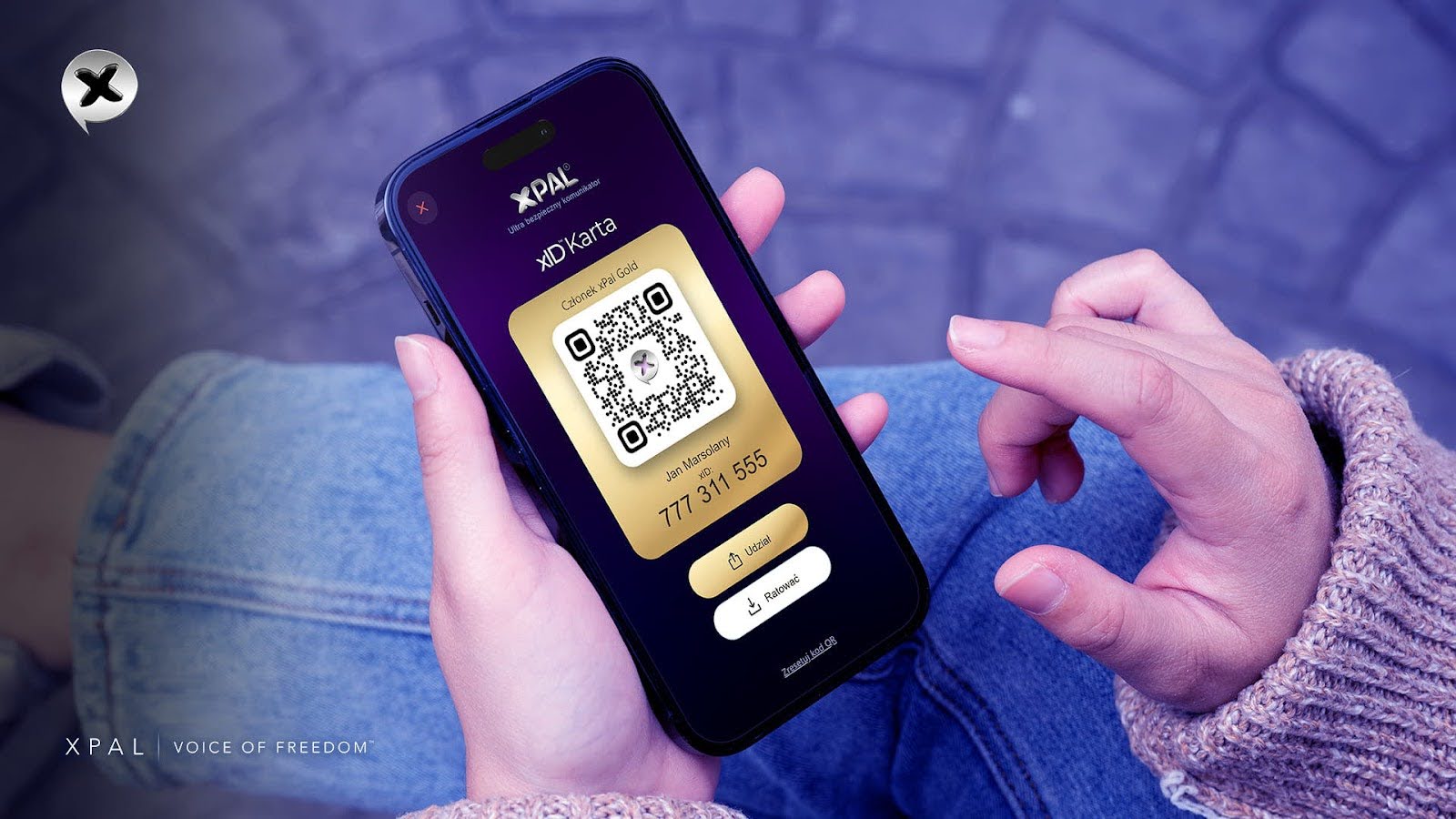
Consequently, instead of asking for a phone number, xPal gives every user an xID®, a unique 9-digit global identifier designed for messaging with no personal data. There is no SIM card to activate, no email address to verify, and no real name to provide.
Simply choose a username, create a PIN, and start conversations on your own terms.
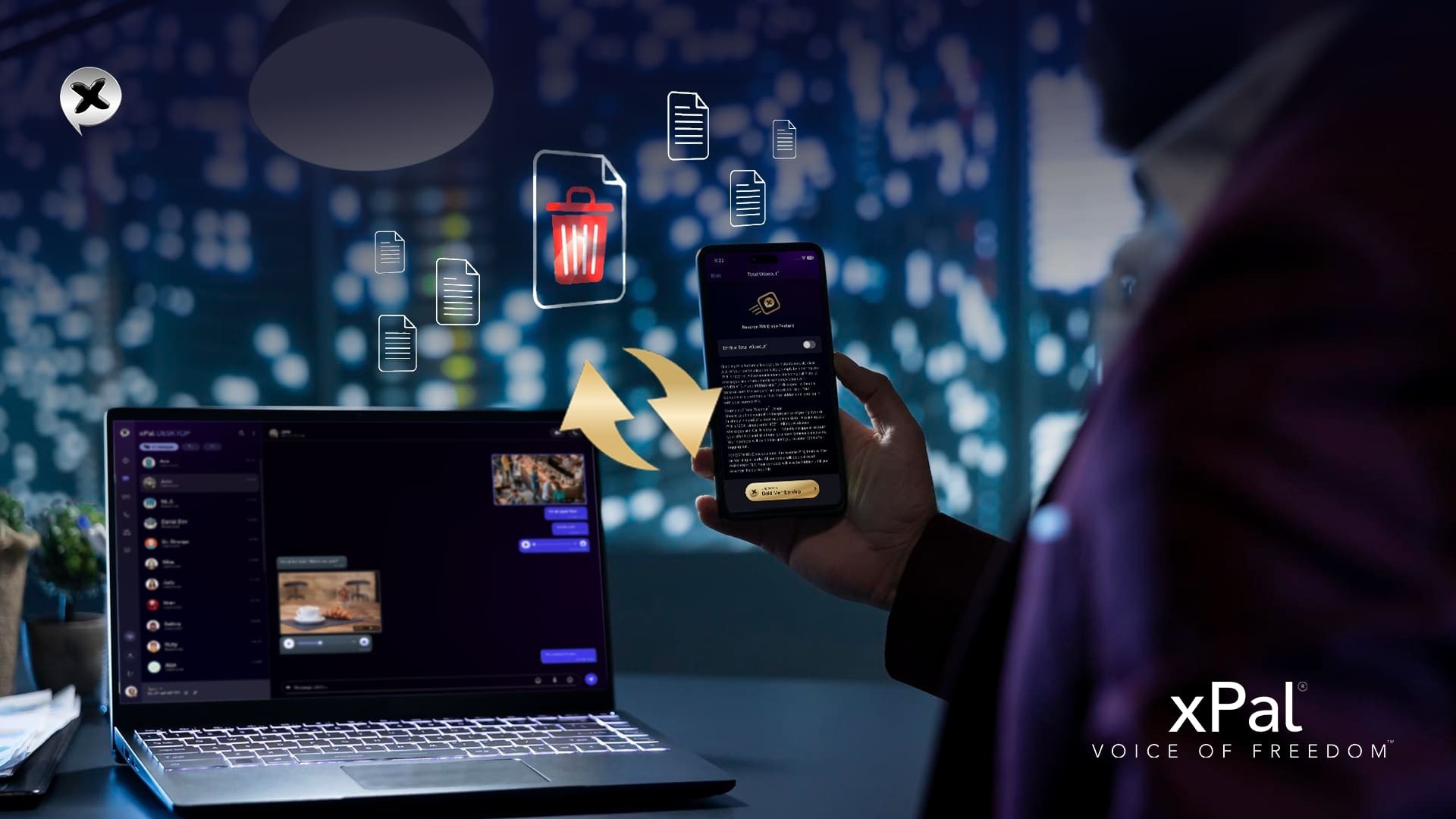
What makes this even more exceptional is all the layers of xPal: an untraceable messaging app built with a privacy-first security architecture, powered by patent-approved technologies, and a collection of privacy features that are rarely found together in a single messaging platform. Building on this foundation, the xPal encrypted messaging app follows NIST cybersecurity guidance and has completed independent DEKRA security assessments for four consecutive years. (2023, 2024, 2025, 2026)
Why is Our Phone Number a Privacy Risk for Messaging?
A phone number is one of the most powerful identity anchors the modern world has created. Unlike an email address, which you can create anonymously in seconds, your phone number is physically registered to you: linked to your name, your billing address, your carrier’s location logs, and, in most countries, your government-issued ID through mandatory SIM registration.
(Still calling the platforms asking for phone numbers to be secure?)
When you sign up for WhatsApp, Signal, or Telegram using your phone number, you provide a login credential that you think, but you are creating a permanent link between your real-world identity and every message you send on that platform, which becomes silent but still exists. Your carrier logs your location every time your phone connects to a cell tower.
Authorities in most jurisdictions can subpoena those records. Over 150 countries require you to register your identity with mandatory SIM registration; your phone number is effectively issued as your government ID for digital communications.
Thus, the consequences can be concrete, such as phone number metadata that establishes a pattern. If there is no personal data to provide, preferably by using a secure Messenger without a Phone Number, this would solve the issue and remove the identity factor before the conversation begins.
What Anonymous Messaging Actually Means (and What It Doesn’t)
Anonymous messaging means your conversations are not tied to personal identifiers, and there is little to no risk of data being misused or abused online because no personal data is being requested, stored, or shared. What it does not mean is complete invisibility or a free pass to misuse a platform.
The phrase anonymous messaging in an untraceable messaging app is often misunderstood or overestimated when it is simply meant to be workable and useful.
Some people think it means sending messages with no rules or accountability.
Others assume it means becoming invisible online.
A responsible anonymous messaging service can still enforce its community standards, prevent abuse, and protect users without collecting unnecessary data. The point to understand is that no personal data is collected or stored that could later be analyzed, shared, exposed, or otherwise used in ways that threaten a user’s digital privacy. And that is precisely the point.
True anonymous messaging requires all of the following:
- No phone number or email required at registration
- No link between your account and any device identifier (IMEI, advertising ID)
- End-to-end encryption so message content cannot be read in transit
- No long-term server-side storage of messages after delivery
- No collection of IP addresses or precise location data
- Automatic metadata removal from media files before sending
- No unnecessary information is requested, and no unnecessary permissions are sought.
xPal Messenger Without a Phone Number: How xID® Works and Changes Messaging Identity?
During xPal encrypted messaging app registration, you choose a username (any name, real or invented), set a 4-digit or 6-digit PIN, and within 60 seconds, you receive your xID®: a unique 9-digit number that is your permanent global communication address on the xPal encrypted messaging app.
Your xID® is randomly assigned. It has no relationship to your phone number, location, device, or identity. It works from any country to any country without area codes or country codes.
Just for understanding, a person in Germany with xID 123 456 789 can communicate instantly with someone in Japan with xID 987 654 321 with no international dialling, no carrier involvement, and no personal data exchanged between them.
When you share your xID® with a contact, they can text you, audio call you, or video call you. They just know your xID® and do not know your name, your location, your device, your phone number, or anything else about you unless you choose to tell them. You are as anonymous as you choose to be. This is architecturally different from the username feature.
Some platforms allow you to share a username instead of your phone number with contacts, despite being created using a phone number, and somehow their servers still link your account to that number. xPal never has your phone number, so there is nothing to link! That is the primary value proposition of an untraceable messaging app built with no phone number required at any step.
The Complete List of What xPal Does Not Collect
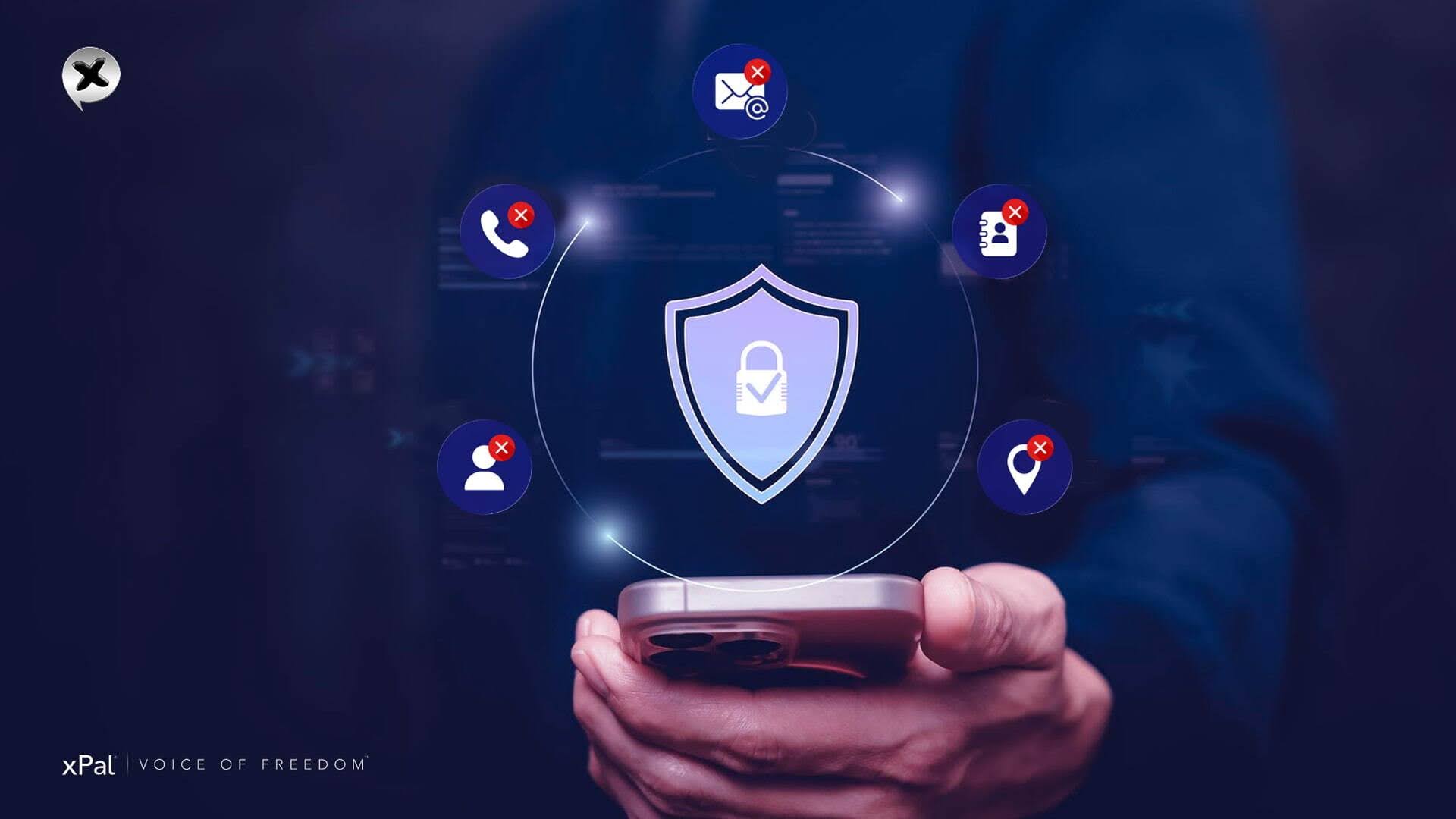
The information below is based on xPal’s documented privacy architecture and verified data practices. Each category is rooted in the platform’s privacy-by-design approach, with no personal data collected. (Nothing is just a marketing claim)
| Data Type | Privacy Practices at xPal |
|---|---|
| Phone Number | Not required. Not requested. Never stored. |
| Email Address | Not required. Not requested. Never stored. |
| Real Name | Not required. The screen name is the user’s choice. |
| Physical Address | Never requested at any stage. |
| IP Address | Used only at the network layer for connection. Not stored or logged. |
| Device Identifiers | IMEI, advertising ID, serial number: none collected. |
| Contact Lists | xPal does not access your device’s contact list. |
| Message Content | Deleted from servers immediately on delivery. Undelivered messages: max 36 hours, then permanently erased. |
| Photo/Video Metadata | Automatically stripped by the Photo & Video Sanitizer™ before transmission. |
| Location | Country-level only (for server routing). No precise location. |
The only general information xPal encrypted messaging app retains: screen name, 9-digit xID®, registration date, last login timestamp, operating system, and country. No personal data is ever stored, accessed, or shared. (Clearly none of this is the user’s personal data)
Comparing Messaging Apps: Which Ones Require a Phone Number?
Here is how a messenger without a phone number compares to one that depends on your phone number.
| App | Registration Requirement |
|---|---|
| xPal | No phone number, email, or SIM. Username + PIN + xID® |
| Signal | Phone number required |
| Phone number required | |
| Telegram | Phone number required |
| iMessage | Apple ID and/or phone number |
| Session | No phone number (Session ID) |
Who Actually Needs Messaging Without a Phone Number?
Anyone who wants to communicate without making a phone number part of their identity. It is still a dilemma that people believe privacy is a privilege, or that it is supposed to be for a certain group of people. This is not only for whistleblowers and journalists. There are broad, everyday reasons to want identity-separated communication:
- Journalists and researchers communicating with sensitive sources
- Business professionals protecting confidential client discussions
- Families in countries with authoritarian communication surveillance
- Activists and NGO workers in regions with monitored telecommunications
- Anyone who buys or sells goods online and does not want to share personal contact information with strangers
- People who have experienced stalking or harassment and want communication that cannot be traced back to their device
- Travellers who don’t want to use local SIM cards but still need secure global communication
- Simply anyone who wants privacy
The throughline is people who understand that their phone number is a liability in certain contexts, and want the option to communicate without it. In every one of these cases, an encrypted messaging app built around No Personal Data collection is what makes that choice possible.
How to Get Started With xPal in a few minutes?
- Download xPal from the App Store (iOS) or Google Play (Android). xPal encrypted messaging app is also available on desktop for Windows and macOS, for great user experience.
- Choose a username. This is your visible name to contacts. It can be your real name, a nickname, or anything else you choose.
- Set a 4-digit or 6-digit PIN. This is your primary security layer. Choose something you will remember; if forgotten, it cannot be reset if recovery is not set up. (Set up Security Questions or phrases in Settings immediately after registration for account recovery.)
- You receive your xID®. This is your permanent global communication address. Share it with anyone you want to communicate with on xPal.
- To find contacts: tap the + icon, enter their xID® manually, scan their QR code, or send an invitation link via any existing messaging platform.
There is no SMS confirmation or email link and absolutely no selfie-with-ID. The entire process takes less than 60 seconds after installation. Every step avoids the one thing competing apps still ask for: no phone number required, ever.
Free vs Gold: What Do You Get Without Paying?
xPal’s free tier is more generous than most apps’ paid tiers. Free members receive:
- Same privacy and security
- Unlimited end-to-end encrypted text messages
- Unlimited encrypted audio calls (outgoing and incoming)
- 30 minutes of encrypted video calls per day
- Up to 3 xIDs on a single device
- Full Photo & Video Sanitizer™ automatic metadata stripping on all media
- Flicker™ Mode: disappearing messages with timers from 30 seconds to 24 hours
All of this comes standard with No Personal Data ever requested to unlock it.
Gold membership adds: unlimited video calling, HD uncompressed photos and videos, Terminate™, Total Wipeout™ (reverse PIN), Decoy PIN, and up to 100 members per group chat.
FAQs
Can I message anyone in the world using only their xID®?
Yes. Any xID® can communicate with any other xID® globally without country codes, area codes, or carrier involvement. As long as both users are on xPal, text, audio, and video communication works from any country to any other country.
What happens if I forget my xPal PIN?
If you have set up Security Questions or a Security Phrase in Settings, you can use these for account recovery. If neither is set up before the PIN is forgotten, the account is permanently locked: this is a security feature (not a bug). xPal untraceable messaging app cannot reset your PIN because it does not store it. Set up your recovery options immediately after registration.
Can someone find out who I am from my xID®?
No. Your xID® is a randomly assigned 9-digit number with no connection to any personal data, device identifier, phone number, or location. Even the xPal encrypted messaging app cannot connect your xID® to your real-world identity unless you voluntarily provide that information in your profile.
Is xPal safer than Signal for anonymous communication?
For users who require complete identity separation, yes. Signal requires a phone number to create an account; a number that is registered to a real identity in most countries. xPal has no phone number required and stores no personal data at any stage. Both use strong encryption, but their anonymity architectures are fundamentally different.
Download xPal for free on iOS (App Store) and Android (Google Play). Also available on desktop and web on both Windows and Mac. Registration takes a few moments because xPal does not ask for a phone number, email, or personal data. It remains, simply, a private and secure messaging app built for people who value privacy first.